
ChatGPT + TRIZ + Design Thinking
You can combine TRIZ's 40 inventive principles with design thinking by using ChatGPT as the bridge between them: feed it your contradiction (the core TRIZ concept), have it map applicable inventive principles, then use design thinking to prototype solutions. This article walks through the process and includes a custom GPT built specifically for TRIZ-driven problem solving.
There couldn't be a cooler mix of tools than ChatGPT, TRIZ, & Design Thinking, and applying them to business and product design problems! Here I'll show you how and share a link to a GPT I've created to empower you to do this yourself.
Let's first start with TRIZ, what's that?!
TRIZ (or Theory of Inventive Problem Solving) is a systematic methodology for innovation and problem-solving.
In 1965, Genrich Altshuller, creator of TRIZ, analysed 40,000 patents. From these, he recognised that the same problems in one area had been addressed by many inventions in other technological areas (Cong & Tong, 2008). Over the years he went on to investigate over 200,000 patents (to date over 1,500,000 patents have been investigated), to see how they were solved (Ladewig, 2008).
In simplistic terms, the essence of a problem you want to solve has most likely previously been solved, so it makes sense to apply the same or similar approach.
As a Design Thinking practitioner at the time I was first introduced to TRIZ, what captured my attention was its application to the Develop phase of the Double-Diamond Design Process (Design Council, 2004). This phase is characterised by generating and evaluating solutions, for me, the most exciting part of the process! Creative thinking and first principles reasoning are essential here — see The 10 Types of Thinking Needed for the AI Future for more on these skills.
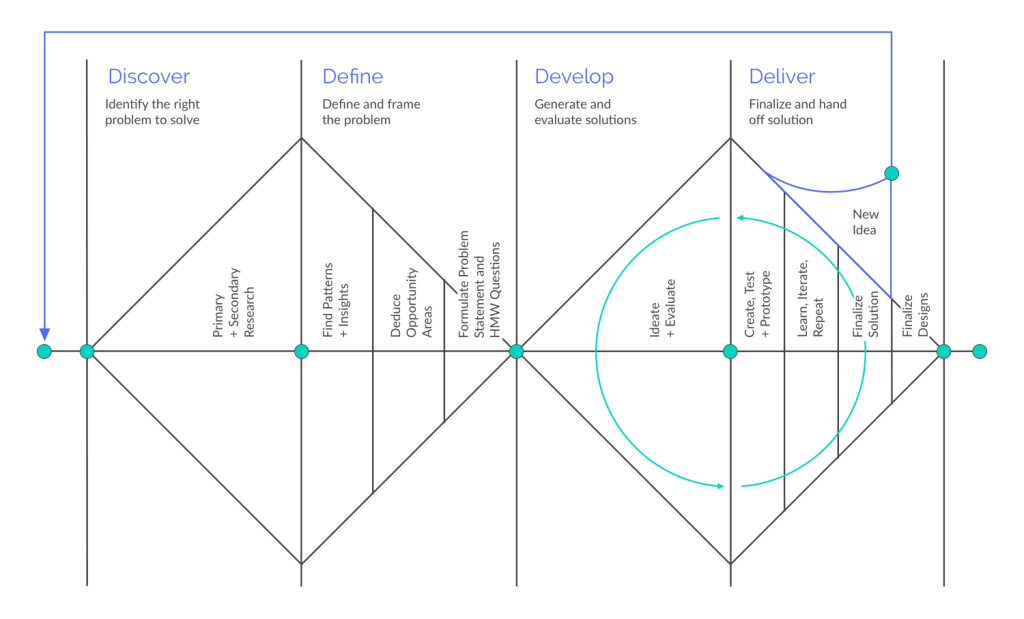
Example activities in this phase include brainstorming and co-designing, however this can be limited by the ability of participants in the process — with TRIZ there is a way to generate solutions, backed by data, which can provide quick and efficient direction on the best solutions to work with.
I am no TRIZ practitioner but it's been fascinating to apply the methodology as best as I've understood it to business and product design problems, and now with ChatGPT I've been able to explore this space further with a GPT I've created on OpenAI's GPTs (OpenAI, 2023) marketplace.

TRIZ: Problem Solver
https://chat.openai.com/g/g-qcgOQOsxs-triz-problem-solver
Before you click and check it out here's a bit of a look at what's under the hood:
> The GPT is to solve the problem described using the TRIZ framework

> The GPT is to ask the User questions if it does not understand the problem or requires clarification on a specific point

> The GPT is to summarise the problem before presenting the solution using
Algorithm for Inventive Problem Solving (ARIZ)

> The GPT is to format the solution in a concise bullet point format
In the background I'm experimenting with incorporating DALL-E Image Generation and Code Interpreter within the GPT interaction and building out the Knowledge and Memory components.
And again, calling out that I am not a TRIZ practitioner so would love to hear from those that actually are! Please drop me a line here
Ok, so what can it do?
Example 1: Product Design Problem
Problem:
I have an ecommerce checkout flow on a product website. I need to simplify the checkout flow to make it quick and easy for customers to purchase products, but I am receiving a long list of requirements from my business stakeholders that I need to include in this flow. How can I best structure the UX to meet both customer and business needs?
TRIZ: Problem Solver output
This problem presents a typical TRIZ scenario where you are facing a contradiction: simplifying the checkout flow to enhance customer experience versus incorporating a long list of business stakeholder requirements that could potentially complicate the process. To resolve this, we'll apply the TRIZ methodology focused on resolving contradictions and optimising processes.


1. Define the Problem: The goal is to simplify the ecommerce checkout flow to improve user experience and increase conversions, while also incorporating various business requirements that risk complicating the checkout process.

2. Identify Contradictions: The primary contradiction is between the need to simplify the checkout process for users and the need to include numerous business requirements that could make the process more complex. The secondary contradiction could involve managing the user interface (UI) design to be both minimalistic yet informative enough to meet business demands.

3. Apply TRIZ Principles:

Principle 1 - Segmentation
Break the checkout process into smaller, manageable steps. This can help keep the interface clean while still including all necessary business requirements. Consider using a progress indicator to show users where they are in the process.

Principle 2 - Taking out
Separate conflicting requirements. Identify which business requirements are essential for the checkout process and which can be moved elsewhere (e.g., optional post-purchase engagement).

Principle 5 - Merging
Combine similar steps or information to reduce the number of actions a user must take. For example, use auto-fill where possible for returning customers to minimize data entry.

Principle 15 - Dynamics
Allow the system to adjust dynamically to the user's actions. For instance, only present certain business-required fields based on the user's previous selections or shopping behaviour.

Principle 34 - Discarding and Recovering
Temporarily hide complex or less important business requirements during the checkout process and reintroduce them later, such as after the purchase is completed or in a follow-up communication.

4. Solution:

Step-by-Step Structure
Implement a multi-step checkout process with a clear progress indicator. This balances simplicity for the user with the need to include all business requirements.

Essential vs. Optional
Distinguish between essential information needed for purchase and additional options or offers. Prioritise essential information during checkout and offer options post-purchase or on a different part of the site.

Auto-Fill and Data Retrieval
Use saved customer data to pre-fill fields, reducing the effort required to complete the checkout.

Dynamic Content Presentation
Adapt the checkout flow based on the user's selections, such as shipping options or payment methods, to only present relevant information and reduce clutter.

Post-Purchase Engagement
Move non-critical business requirements to post-purchase stages. For example, offer additional products, ask for reviews, or provide membership options after the checkout is complete.


Applying these principles allows you to design a checkout process that is both user-friendly and compliant with business requirements, ultimately enhancing customer satisfaction and potentially increasing conversion rates.
This output is really impressive and the sort of advice I'd expect an experienced Product Designer to methodically work through themselves or advise a more junior designer to.
What's really interesting and incredibly valuable, on top of the benefits already covered, is that the Design process is often iterative, so having a clear view as to what to work towards from the outset like this can be an incredible time-saver.
Example 2: Business Problem
Problem:
As a vendor, how do I obtain a reference from a company when their policy is not to provide business references
This problem is based on a real world example and something vendors may experience when working with some clients.
TRIZ: Problem Solver output
This approach allows you to navigate the company's policy creatively, respecting their constraints while still providing potential clients with the assurance they need regarding your expertise and reliability. Your challenge involves navigating a policy constraint where a company does not provide business references, yet such references are crucial for your credibility and business growth. This scenario presents a classic contradiction in the TRIZ framework, where you need to obtain something that is systematically denied by existing rules. Let's apply the TRIZ methodology to find inventive solutions.


1. Define the Problem: You need to obtain business references to enhance your credibility and attract more clients. However, the company's policy restricts issuing such references, creating a barrier to achieving your goal.

2. Identify Contradictions: The primary contradiction is that you need a reference to improve business credibility, but the company's policy prevents it from providing one. The secondary contradiction might involve the need to respect the company's policy while still obtaining some form of validation or endorsement.

3. Apply TRIZ Principles:

Principle 24 - Intermediary
Use an intermediary to achieve your goal. Instead of a direct reference, you could ask for a letter stating the duration and scope of the work without it being a formal reference.

Principle 26 - Copying
Instead of a direct business reference, request permission to use anonymized project data or results as a case study, ensuring confidentiality is maintained.

Principle 2 - Extraction
Extract the essence of what you need from a reference – credibility and proof of successful collaboration. Seek public endorsements, reviews, or feedback on platforms that do not violate the company's policies.

Principle 22 - Blessing in Disguise
Use the limitation to your advantage. Highlighting the company's policy in your narrative can showcase your respect for client confidentiality and professional integrity, potentially attracting clients who value these traits.

4. Solution:

a). Request a neutral letter from the company outlining the project scope and duration without it being a formal endorsement.

b). Develop anonymised case studies showcasing the project's challenges and solutions, ensuring all sensitive information is omitted or generalised.

c). Encourage feedback or endorsements on professional networks or social media platforms, adhering to the company's policy constraints.

d). Leverage the policy as a testament to your commitment to confidentiality and professionalism in your marketing and pitch materials.


This approach allows you to navigate the company's policy creatively, respecting their constraints while still providing potential clients with the assurance they need regarding your expertise and reliability.
Next steps
If you've made it this far, that's awesome!
I hope you've gained some value from this post, would love to hear your thoughts and how you've used the TRIZ: Problem Solver GPT.
- Add the TRIZ: Problem Solver GPT to your ChatGPT account by clicking this link: https://chat.openai.com/g/g-qcgOQOsxs-triz-problem-solver
- Connect with me on LinkedIn and drop me a line! https://www.linkedin.com/in/sashamerzliakov/
Frequently Asked Questions
What is TRIZ and how does it work?
TRIZ (Theory of Inventive Problem Solving) is a systematic methodology for innovation developed by Genrich Altshuller after analysing over 200,000 patents. It identifies that most problems have been solved before in other domains, and provides principles to apply those proven solutions to new challenges. TRIZ resolves contradictions — situations where improving one aspect of a system worsens another.
How can ChatGPT be used with TRIZ for problem-solving?
ChatGPT can apply TRIZ principles to business and product design problems by identifying contradictions, selecting relevant TRIZ principles, and generating structured solutions. A custom GPT called TRIZ: Problem Solver summarises the problem using ARIZ (Algorithm for Inventive Problem Solving) and presents solutions in a concise format.
How does TRIZ relate to Design Thinking?
TRIZ complements Design Thinking by strengthening the Develop phase of the Double Diamond process — where solutions are generated and evaluated. While Design Thinking relies on brainstorming and co-design, TRIZ provides data-backed inventive principles that can generate solutions more systematically, giving direction on the best approaches before iterative design begins.
What types of problems can TRIZ solve?
TRIZ can solve both product design and business problems. For product design, it helps resolve UX contradictions like simplifying checkout flows while meeting complex business requirements. For business problems, it can address policy constraints, operational contradictions, and strategic challenges by applying inventive principles from patent analysis.
What is the TRIZ contradiction matrix?
The TRIZ contradiction matrix maps common engineering contradictions to the inventive principles most likely to resolve them. When improving one parameter worsens another, the matrix suggests which of the 40 TRIZ principles to apply. Combined with ChatGPT, these principles can be applied to modern business and digital product challenges beyond traditional engineering.